Leea Indica
Bandicoot Berry · Memali · 岩陀 (Huǒ tǒng shù)
Leea indica (Burm.f.) Merr.
Overview
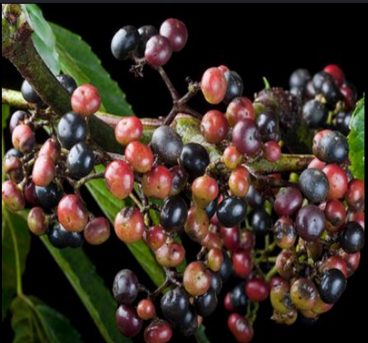
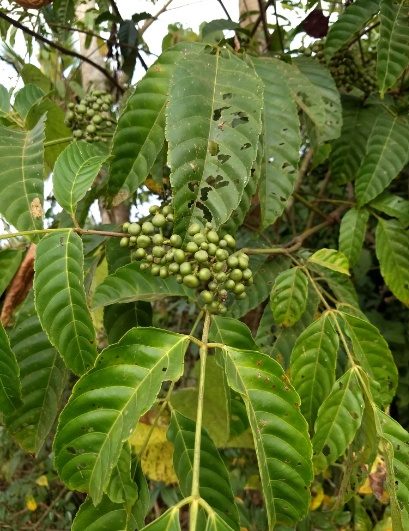
Leea indica is a large evergreen shrub native across South and Southeast Asia, common in Singapore's parks, community gardens, and local herbal circles. Its leaves are the most commonly used part, traditionally taken as a cooling tea for everyday wellbeing. A closely related species, Leea angulata, is Critically Endangered in Singapore (NParks) and should never be wild-harvested — only cultivated material should be used.
Traditional Use
Across Malay, Chinese, and wider Southeast Asian herbal traditions, Leea indica leaf and root preparations have long been used for digestive complaints, fevers, wound care, and postpartum recovery. In Ayurvedic terms it's classed as a pitta-pacifying herb; in Traditional Chinese Medicine terms it clears heat and dampness. Community herbalists in Singapore (including Uncle Tan's network) recommend the dried leaf tea for general wellness and immune support.
What the Research Shows
Note: Tier 1–4 evidence — laboratory and animal studies unless noted; no large-scale human clinical trials yet exist for this species.
- Strong laboratory evidence for antioxidant and broad-spectrum antimicrobial activity, driven by a high phenolic and flavonoid content.
- Traditional antidiarrhoeal use is well supported by both ethnobotanical documentation and animal studies.
- Preliminary laboratory (in vitro) studies — including work from NUS and SingHealth Duke-NUS researchers on Singapore-collected material — have found leaf extracts inhibit growth in several cancer cell lines. This is early-stage laboratory research, not clinical evidence, and should never be read as evidence that the herb treats cancer in people.
- Animal studies suggest blood-glucose-lowering and liver-protective effects at controlled doses; human data does not yet exist.
- Mild sedative/anxiolytic and pain-relieving effects shown in mouse studies, with no acute toxicity observed up to high test doses.
How It's Traditionally Prepared
Most common as a leaf tea: 3–5 g dried leaves steeped in 200 mL boiling water for 5–10 minutes, 1–2 cups daily. Root and leaf decoctions, poultices, and postpartum bath preparations also appear in the traditional literature.
Safety & Who Should Be Cautious
Traditionally avoided in pregnancy and during active menstruation. May have an additive effect with blood-sugar-lowering medication — worth mentioning to your doctor or pharmacist if you take any. Patch-test before topical use.
Available at Thera Sanctum: Sold as a packaged tea (30g, S$12) in our current workshop batch.
Ask us on WhatsAppThis page is educational and reflects traditional use and preliminary research. It is not medical advice and this herb is not a registered medicine. Speak with a qualified healthcare provider before using any herb alongside existing medication or a diagnosed condition.
← Back to Local Herb Directory